
Poured concrete walk
Concrete suits a straight, simple run to the door, and it's the easier surface if you push a stroller or wheelbarrow over it. You can keep it plain or add color or a stamped texture so it fits the house.
Cracked, sunken or muddy path to the door? We build concrete or paver walks that feel steady underfoot and carry water off.
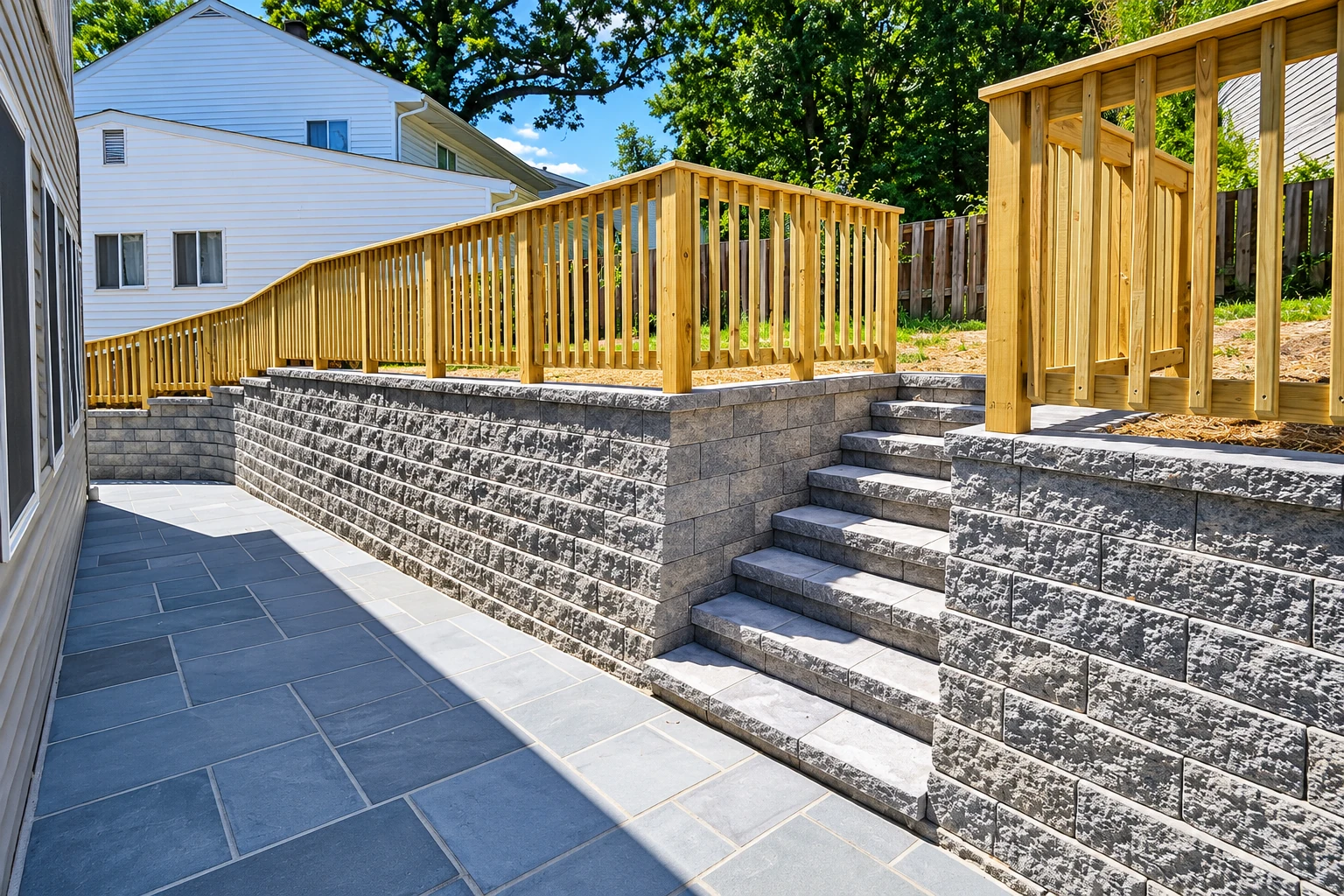
Walkway construction in South Bend means building a new path across your yard in poured concrete or interlocking concrete pavers, dug out and set on a firm base, so you get steady footing to the door and water runs off instead of pooling.
Most folks call us because the old walk has cracked, sunk or tipped back toward the house, or because there never was one and the lawn has worn into a muddy track. The price mostly turns on how long and wide the walk is, whether you pick plain concrete, colored or textured concrete, or pavers, and how much old walk has to come out first. The schedule turns on the season, because concrete and paver base both need the right weather to go in well. When I come out, I measure it, walk it with you and write the estimate in plain words, so you see your own figure before anything's decided. If the walk meets your drive, our driveway pavers work can tie the two together.
I come out myself to look at your yard and write the estimate, and I'm on the crew alongside our masons and laborers when the walk goes in. The person who told you how it would slope is the one checking it on the ground.
I grew up on a farm fixing fences, barn walls and old foundations, then learned masonry under an experienced mason around South Bend before starting this business in 2023. A patch done wrong costs more than doing it right once, so that's how I build walks.
We're fully licensed and insured, so you aren't carrying the risk while our crew works on your property. Your satisfaction, guaranteed. When you're ready to talk about a walk, call (574) 213-0235 or use the form below with its rough length.
We reply to every call and message within one business day, and there's no obligation. Tell us the walk's rough length, whether you lean toward concrete or pavers and whether it meets the public sidewalk. Then I'll set a time to come out, walk it with you and write the estimate up in plain words.
The St. Joseph County Building Department issues construction permits for every property in the City of South Bend and for county homes with a 5-digit address, and every contractor working in the city has to be registered or licensed with it, though an owner living in the home may do their own work. I won't guess at whether a walk on your own lot needs a permit, so before we start we check with that office, and if the job calls for one we pull it as part of the work. Any digging in a City sidewalk area needs a permit from a bonded contractor, and work in the street, alley or sidewalk first needs a bond with the city's Department of Public Works, so tell us up front if your new walk meets the public sidewalk. When you're checking out any contractor, you can ask to see the signed surety bond and proof of workers' comp the city asks building contractors for when they register.
Around South Bend we mostly see older homes with a front walk that's cracked, sunk or tipped back toward the house, and side paths where water sits along the foundation. We're based in South Bend and do the same work in many cities around it in northern Indiana and southwest Michigan, including Mishawaka and Granger.
Across the US, a paver or poured concrete surface usually runs about $6 to $30 per square foot, and that's a national guide figure for the surface, not our price. Where your walk lands depends mostly on its size and on whether the concrete is basic or has decorative color or texture. I'll measure it on a free visit and write up your own number.
Concrete gives you a smoother surface to walk on but can get slippery when wet, while pavers grip better but can feel bumpier, depending on the paver. For a front walk you'll use in rain and snow, I usually lean toward pavers for the footing, and if you roll things over it, concrete is easier.
New concrete should air dry for at least 30 days before the first freeze, so in South Bend a concrete walk is best poured well ahead of winter. It also holds up to freeze-thaw damage, the surface flaking called scaling, when it's air-entrained concrete with tiny air bubbles and proper cement content. If your timing runs late, we'll talk through whether waiting for spring makes more sense.
Edge restraints along the sides keep it together, because they hold the pavers tight so they interlock across the whole walk. Paver industry guidance calls them an essential part of a paver walkway, and we don't leave them out.
Building guidance says a walk within 10 feet of the foundation should slope down and away from the house at a 2% grade, which is about a quarter inch per foot. That's guidance rather than a South Bend rule, but it keeps water from running back toward your basement. Ask how any walk you're quoted will slope.
No, deicers shouldn't be used on concrete less than one year old. That matters most when a walk is poured in the warm months and its first winter comes a few months later, so we'll remind you when we finish the job.