
Spot repointing on worn sections
This suits a wall that's mostly sound with a few bad areas, like under a gutter, beside a downspout or along a step. We fix only what needs it, which keeps the job smaller and leaves the good joints alone.
Mortar crumbling out of your brick joints? We clear out the worn mortar and refill the joints so your wall holds up for years.
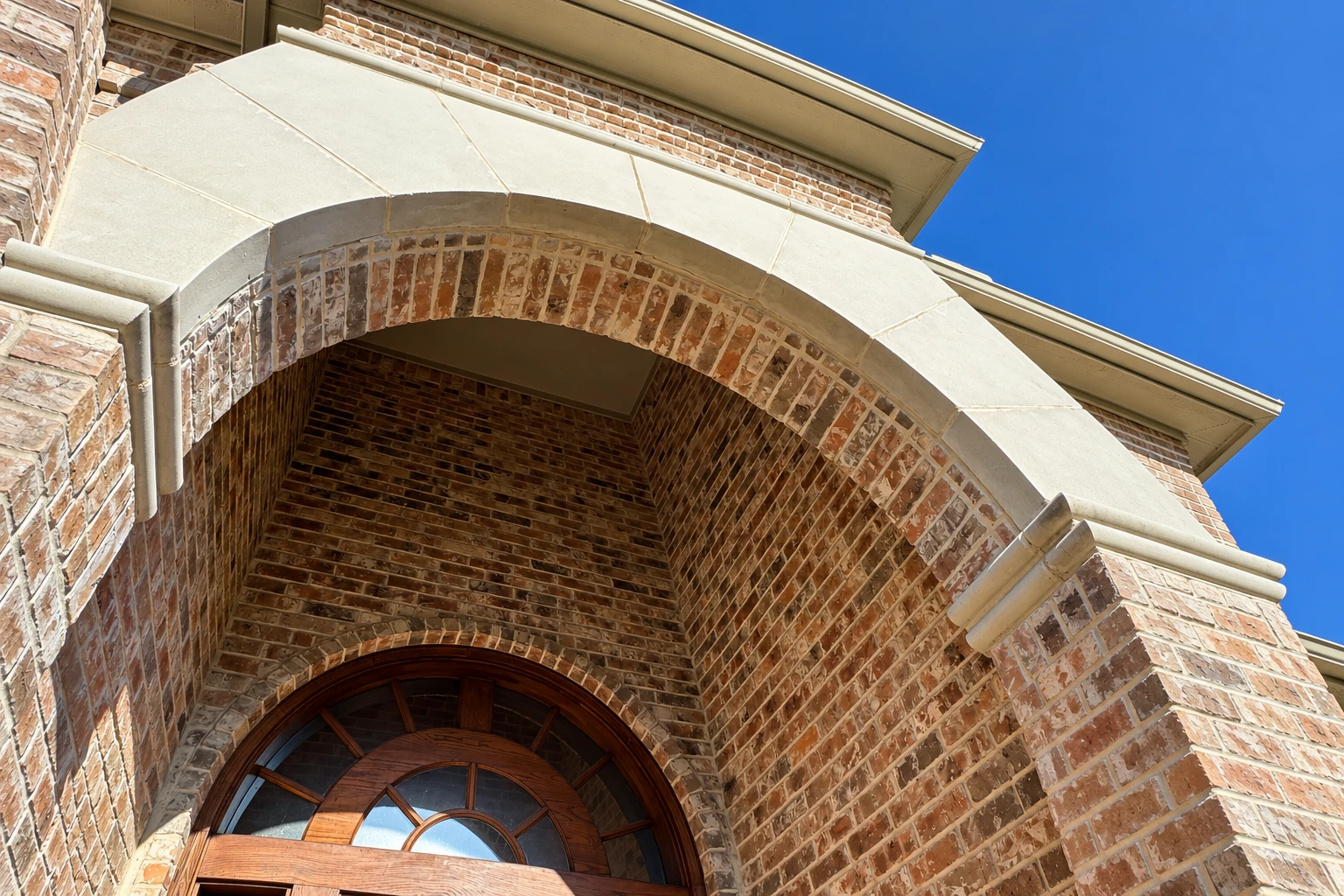
Brick pointing, also called repointing, means clearing the worn mortar out of the joints between your bricks and packing in fresh mortar, so the wall stops taking in water through open joints. In South Bend we do it on older houses, chimneys and garden walls whose joints have gone sandy or started falling out.
Most folks call me after they find sand on a windowsill or a joint they can push a key into, usually on the side of the house that takes the wind and rain. The price turns on how much wall needs it, how high it goes, since a chimney or second story means ladders or scaffolding, and how hard the old mortar is to get out. The schedule turns mostly on weather, because new mortar wants mild days to cure, so a call in January usually means a spot on the calendar in spring. When I come out, I'll measure the wall, look at the joints up close and write you an estimate in plain words.
I come out to look at your wall and write the estimate myself, so the person pricing the job is the one who knows how it gets done. I also work on the crew alongside our masons and laborers, so I'm there when your joints get raked and filled.
I grew up on a farm fixing fences, barn walls and old foundations, then learned masonry under an experienced mason around South Bend before starting this business in 2023. Careful repair on older brick, like repointing and chimney work, is what we're best known for.
We're fully licensed and insured. That matters on brick pointing because most of the work happens on ladders and scaffolding against your house, and you want the people up there properly covered. Ask me about it when I come out and I'll show you.
Your satisfaction, guaranteed. On a farm you learn that a patch done wrong costs more than doing it right once, and that's how we repoint. When you're ready, call (574) 213-0235 or send us a request and I'll set a time to walk your wall.
Send a few photos of the worn joints and tell us how high the wall goes, and we'll reply within one business day. Estimates are free, done on site and come with no pressure and no obligation. I'll come out, walk the wall with you and write up what it needs in plain words.
The city's Building Department issues a combined City and County Renovation Permit, and masonry and chimneys are on the list of work it covers. Before work starts we check with the office that covers your address, and when your job calls for a permit we pull it as part of the job. The city also requires every contractor, subcontractors included, to be registered or licensed with the department to work in South Bend and St. Joseph County, so it's fair to ask any crew about that. If you live in a single-family home and want to do the work yourself, the city lets owner-occupants do it after signing an affidavit with the proof it asks for.
Most of the pointing we do here is on older brick houses, where the joints on the weather side wear back first and chimneys lose mortar near the top, and our freeze and thaw winters open up any joint that's already loose. We're based in South Bend and do the same work in many cities around it in northern Indiana and southwest Michigan, including Mishawaka and Niles.
Your brick likely needs repointing if the mortar has worn back more than 1/4 inch from the face, crumbles when you rub it, has gaps, or shows hairline cracks in the joints or between the brick and the mortar. Any one of those signs is worth keeping an eye on. Send photos or have me out, and I'll tell you whether it's a spot repair or the whole wall.
Repointing brick across the US usually costs about $500 to $2,500 per 100 square feet of wall, and that's a national figure, not our price. Taller walls that need scaffolding run more per square foot. Your own number comes from the estimate once I've measured the wall and seen how worn the joints are.
Spring and fall are best, and one cost guide advises planning for days that stay between 40 and 90 degrees for at least 24 to 72 hours, which is good curing weather for mortar. In South Bend, older weather averages put the last 32-degree spring day around May 1 and the first fall one around October 18, and that frames those two seasons. It's why we book this work in mild spells and not in deep winter.
Mortar joints typically last more than 25 years, while the brick itself can go well past 100. That means the joints, not the brick, set your upkeep schedule, and a sound brick wall may need repointing again over its life.
No, smearing a thin coat over the joints, called surface grouting, can't stand in for clearing them out and repointing. Federal preservation guidance doesn't recommend it for historic masonry either. The new mortar needs to go into a cleaned-out joint to hold.
The best way keeps power saws out of thin joints, because saws on thin brick joints almost always break brick edges and cut too far into the short vertical joints. Ask any crew how they plan to clear your joints before you hire them. I'll show you how we'd do it on your wall when I come out.
Contact the Historical Preservation Commission first, before you apply for any building permit, and that goes for designated historic landmarks too. We'll help you reach the commission before anything else gets scheduled.