
Repointing the joints only
This suits a wall where the bricks are sound and tight and only the mortar has gone soft or sandy. We clear the joints and repack them, and it costs less because nothing past the mortar has to be touched.
Crumbling mortar, stair-step cracks or loose brick? We find what's causing it, fix that, then redo the joints without hurting the brick.
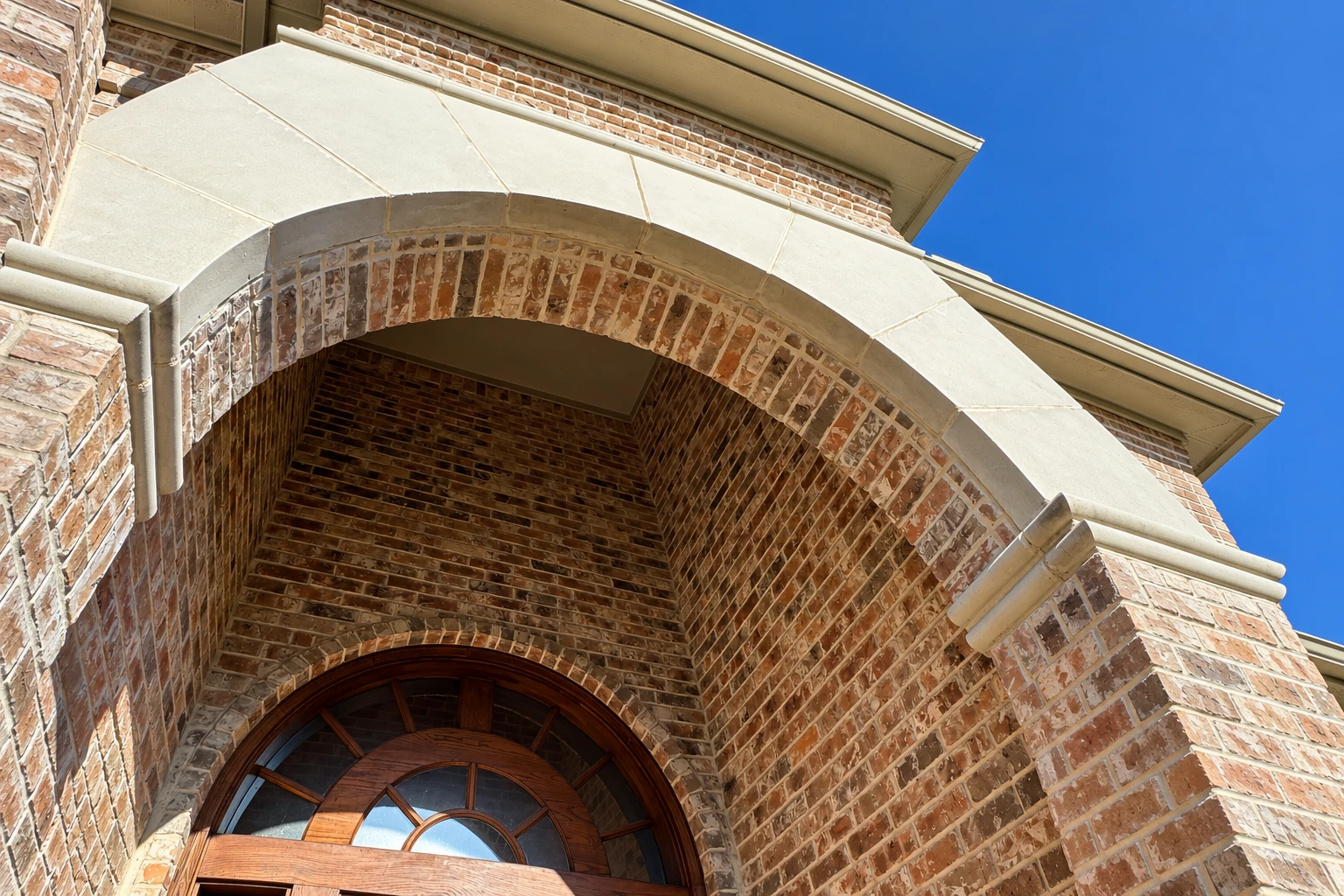
Masonry restoration in South Bend usually starts with repointing, where we cut the worn mortar out of the joints and pack in new, and it reaches into brick repair when the damage goes past the joints. Done right, it lets moisture leave the wall through the mortar instead of through your brick.
Most people call us after they notice sandy mortar on the sidewalk, a stair-step crack running up the wall or a damp spot inside, and the first thing I want to know is whether the joints are the whole story. If it's only the mortar, plain tuckpointing may do it, but leaks, loose or cracked bricks and brick faces flaking off mean the wall needs repairs too, and that's the biggest thing that moves the price. Height matters as well, since a wall that needs scaffolding costs more per square foot than one we can reach from the ground, and so does fixing whatever caused the damage, like a leak or a bad downspout. The schedule mostly turns on getting mild weather for the new mortar and, on some houses, a permit or historic review first. When I come out, I walk the job with you and write it up in plain words, so you know what's included before you decide anything.
I come out myself to look at the wall and write the estimate, and I work on the crew alongside our masons and laborers. The person who sized up your brick is the same one up on the scaffold, so nothing gets lost between the visit and the work.
I grew up fixing fences, barn walls and old foundations on the family farm, then learned masonry under an experienced mason around South Bend before starting this business in 2023. Careful repair on older brick, like repointing and chimney work, is what we're known for.
We're fully licensed and insured, so you aren't carrying the risk while our crew works on your house. Your satisfaction, guaranteed. When you're ready, call (574) 213-0235 or send the form, and I'll set a time to walk the wall with you.
We reply to every call and message within one business day. Then I come out, walk the wall with you and write up the estimate in plain words, free and on site, with no pressure and no obligation. If you've seen leaks, stair-step cracks or loose bricks, jot down where so we can look at those first.
In South Bend, masonry and chimney work falls under the renovation permit application at the Building Department, which handles permits for both the city and St. Joseph County. Before we start, we check with the office that covers your address, and when your job calls for a permit, we pull it as part of the work. Every contractor working in the city or county, subcontractors included, has to be registered or licensed with that department, so it's fair to ask anyone you're thinking of hiring, though an owner living in the house can do their own work. If your house is in a historic district or is a historic landmark, you need to contact the Historic Preservation Commission before applying for any building permit, and we'll help you reach them first. The commission issues a Certificate of Appropriateness that lets you do the work just as you applied for it, and it's good for one year from the day it's issued, so we plan the masonry to get done inside that year.
We're based in South Bend and work in many cities around it in northern Indiana and southwest Michigan, including Mishawaka and Niles. A lot of our calls come from people in older brick houses with sandy joints, chimneys that need pointing and downspouts that have run down the same corner for years, and we handle them the same careful way wherever the house sits.
Repointing brick across the US usually costs about $500 to $2,500 per 100 square feet, according to one national cost guide. That's the market's range for the joint work, not our price, and it climbs with scaffolding and any brick repairs. Your own figure comes from the estimate after I've seen the wall.
Late spring through early fall is the time to do it. One cost guide advises repointing when air temperatures stay between 40° and 90° F for 24 hours before the work and 72 hours after. That stretch of the year fills up, so it pays to call early and get on the schedule for the warmer months.
Water is usually behind it, and a leaking downspout can leach the mortar right out of the joints it runs over. Before I come out, take a look at your gutters and downspouts and note where the wall stays wet. That tells us where to start and what has to be fixed so the new joints last.
Older brick usually does best with a softer, high-lime mortar rather than a hard cement mix. Guidance on historic walls says high-lime mortar lets moisture pass more readily, while mortar that traps moisture damages the masonry and can trap salts that make the brick face spall, or flake off. If your house is older, ask any contractor what mortar they plan to use.
Clean it gently and only once there's no chance of frost. Water at high pressure, the kind you get from power washing, is rough enough to etch soft stone and some types of brick, and water left inside the masonry can freeze and crack it or make it flake. We'd rather leave a little dirt on a wall than take the face off the brick.